

What is VENZX?
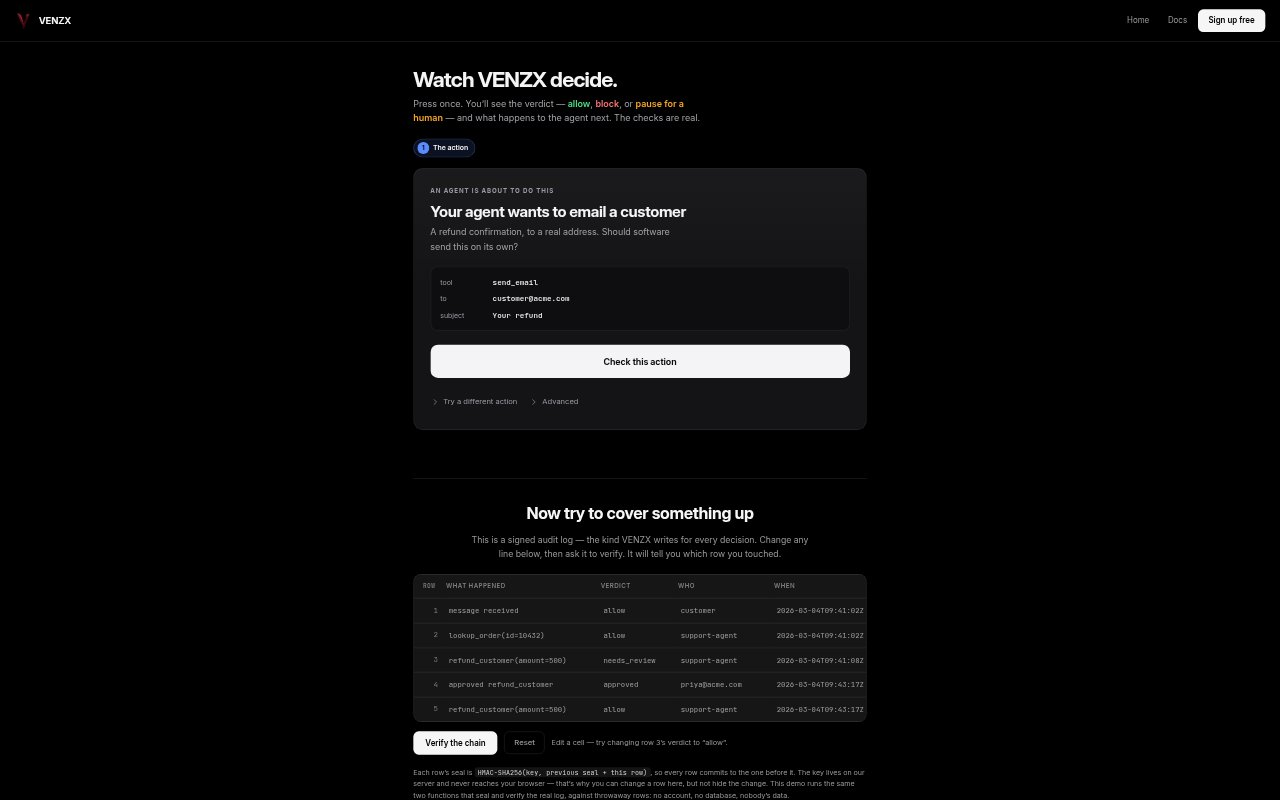
VENZX is a hosted checkpoint for AI agents, checking actions before they reach tools, APIs, or other external services. It applies rules to decide whether an action can proceed, must be blocked, or needs human approval, and records the decision in a tamper-evident log. Teams building agents can use it with different frameworks or direct API calls to add oversight, spending limits, and an auditable record of agent activity.
VENZX Features:
Action Rules: Set per-tool allow and deny rules so VENZX checks each call before it runs and blocks actions that do not meet your policy.
Human Approval: Pause selected high-risk actions and email an approver one-click Approve or Reject options, with no login required.
Approval Timeout: Set a timeout for pending requests; if nobody approves in time, VENZX rejects the action rather than letting it proceed.
Per-Run Limits: Set hard limits on tool calls, tokens, and cost per run, enforced across servers to stop an agent when it reaches its ceiling.
Tamper-Evident Log: Record each decision in a cryptographically linked log that can be checked for altered, removed, or reordered entries.
Log Exports: Search and export decision records as CSV or printable PDF, and view activity through a read-only status page.
Framework Support: Use VENZX as a hosted API in front of agent tool calls, with support for common frameworks and direct API integrations.
VENZX Benefits:
Fewer Unapproved Actions: Human review for sensitive operations gives teams a chance to catch a risky email, payment, or deletion before it takes effect.
Controlled Runaway Costs: Per-run ceilings help contain the cost of loops or unusually active agents before they consume more of the available budget.
Clearer Accountability: A record of what happened, when, and why helps teams explain an agent’s decisions to colleagues, customers, or auditors.
Less Manual Monitoring: Automatic checks on each action reduce the need for someone to watch every agent call in real time.
Safer Agent Rollouts: Teams can allow routine actions while keeping higher-risk work subject to review, making it easier to introduce agents with defined boundaries.
Use Cases:
Customer Emails: Require a person to review an agent’s refund confirmation or other customer email before it is sent.
Agent Payments: Set approval rules for an agent that can move money, so a human can review a payment before it runs.
Code Execution: Apply tool permissions and spend limits to agents that run code or call APIs as part of their work.
Sensitive Deletions: Hold an agent’s delete action for approval when removing data or other resources should not happen automatically.
Audit Requests: Export an agent’s decision history when a customer, manager, or auditor asks what actions it took and why.