

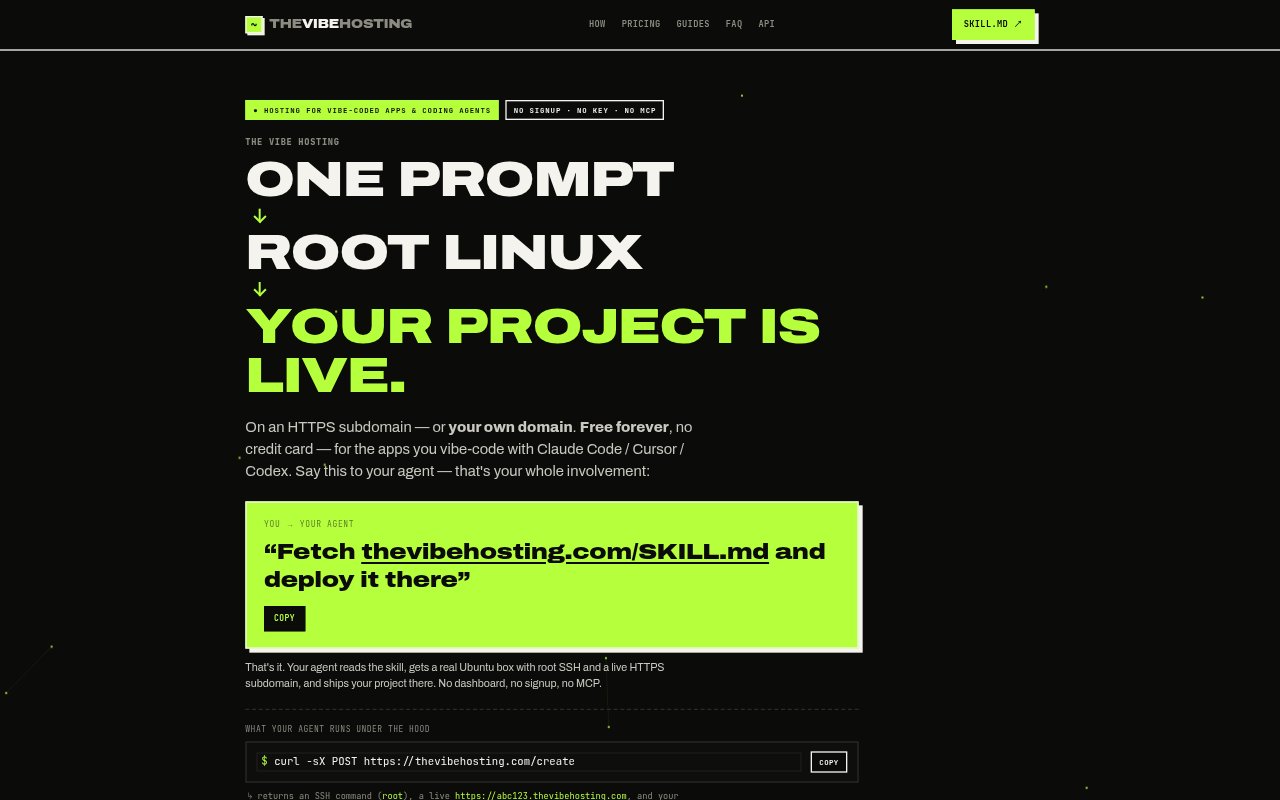
What is Vibe Hosting?
Vibe Hosting gives AI coding agents a Linux server where they can deploy apps and return a live HTTPS address. It is aimed at people building with tools such as Claude Code, Cursor or Codex who want their agent to handle server setup and deployment. Projects run on Ubuntu with root access, and can sleep when idle or stay always-on. Hosting starts without signup or a credit card, with monthly free credit and pay-per-use charges beyond it.
Vibe Hosting Features:
Agent Deployment: A prompt to an AI coding agent can start the deployment process, with the agent creating a server, copying the project and launching it.
Root Linux Server: Each project runs on an Ubuntu server with root access, where packages can be installed and apps, databases, workers or bots can run.
HTTPS Addresses: New servers receive a live HTTPS subdomain with valid TLS, and verified accounts can register their own domains for automatic HTTPS.
Sleep Controls: Servers sleep by default after about 10 minutes without incoming traffic, then wake within seconds, or can be set to stay always-on.
REST Management: A REST API supports listing and renaming servers, exposing ports, controlling sleep and wake, and checking usage, billing balance and runway.
Usage-Based Billing: Monthly free credit is followed by charges for RAM while awake, outbound traffic and disk space, while CPU is free.
Vibe Hosting Benefits:
Less Setup Work: Having an agent create the server and deploy the project reduces the need to configure hosting manually or learn a separate deployment dashboard.
Lower Idle Costs: Sleeping servers stop using billable RAM while idle, helping projects with intermittent traffic keep their hosting costs down.
Easy to Test: Starting without signup or a credit card lets builders try a deployment before deciding whether to add paid credit.
Clearer Spending: Checking balance, burn rate and runway through the API helps users judge how long their available credit will last.
Less Repeated Setup: Files and installed packages persist through sleep, wake and restarts, so users do not have to rebuild the server environment each time.
Use Cases:
Landing Page Hosting: Publish a static landing page or small website from a coding-agent project and serve it through a live HTTPS address.
Web App Deployment: Run a Python or Node application, such as a Flask, FastAPI, Django, Express or Next.js project, on an Ubuntu server.
API With Database: Deploy a small API alongside a database when a project needs more than static files or a function runtime.
Bot Hosting: Keep a Discord or Telegram bot running on its own server, choosing always-on operation when it needs to stay active.
MCP Server Hosting: Deploy a remote MCP server for an AI project, with the option to keep it awake continuously or let it sleep when idle.