

What is vibecheck?
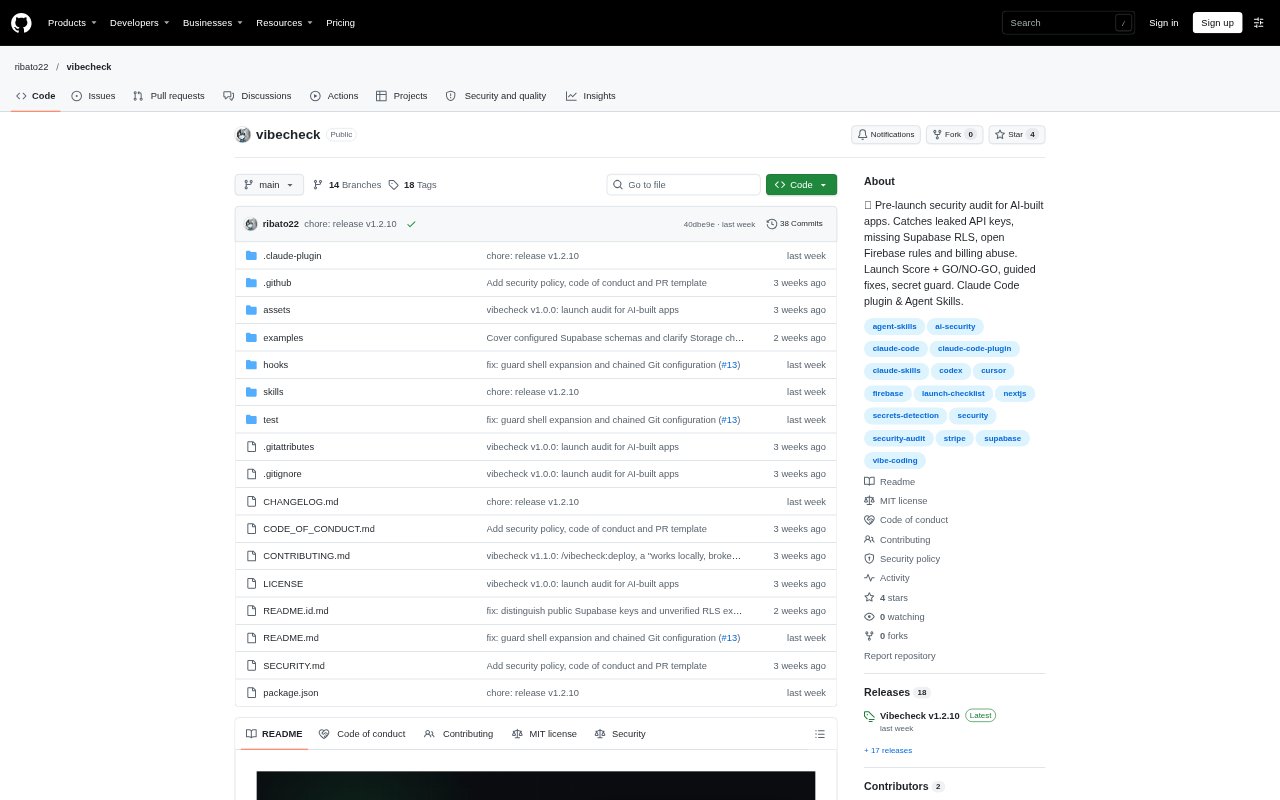
vibecheck is a set of skills and checks for AI coding agents that helps founders and teams review AI-built apps before launch. It audits code for security, launch-readiness, and deployment problems, then gives a score, a verdict, and suggested fixes. Its checks cover common web stacks and services, with broader checks for other stacks. It works with Claude Code, Cursor, Codex, Gemini CLI, OpenCode, Windsurf, and other agents.
vibecheck Features:
Security Audit: A zero-dependency scanner runs more than 60 checks, then an AI agent reviews findings against the code and traces potential attack paths.
Launch Score: Each audit reports a score from 0 to 100 and gives a GO, FIX FIRST, or NO-GO verdict.
Secret Guard: A Claude Code hook checks file writes and Git commits or pushes for high-confidence secrets, and can block them before they are saved or shared.
Guided Fixes: Findings include plain-language explanations and copy-ready prompts, while the fix command handles issues one at a time and verifies the result.
Deployment Checks: The deploy command checks host environment variables, localhost URLs, import casing, ports, serverless storage, and other production configuration issues.
Focused Checks: Separate commands cover quick pre-deploy reviews, security-only checks, launch checklists, and recurring bugs that keep returning after attempted fixes.
vibecheck Benefits:
Clearer Ship Decisions: A scored verdict helps teams distinguish critical launch blockers from issues they can address later, rather than relying on whether an app appears to work.
More Useful Findings: Code review and attack-flow tracing help filter false positives, so developers can focus their attention on problems that apply to their app.
Accessible Remediation: Plain-language explanations and ready-to-use prompts make findings easier to act on, including for people building apps with no-code tools.
Fewer Avoidable Leaks: Blocking exposed keys and accidental environment-file commits can prevent credentials from reaching browser code or a shared repository.
Fewer Production Surprises: Checking deployment configuration before release can surface mismatches that might otherwise leave a locally working app broken on its host.
Use Cases:
Pre-Launch Review: Run a full audit before releasing an AI-built app to check for security findings, launch checklist gaps, and issues that may block deployment.
Supabase App Check: Review a Supabase project for exposed data risks, including missing row-level security, unsafe policies, and service-role keys in browser code.
Payment Flow Review: Check an app that charges users for rate limits, prices taken from requests, unverified payment webhooks, or premium access granted from a success URL.
Failed Deployment Triage: Investigate an app that works locally but fails on its host by checking environment variables, import casing, ports, and serverless storage.
Repeated Bug Fixes: Use the unstuck command when an AI coding agent keeps repeating fixes for the same bug, to reproduce it and look for the underlying cause.