
What is Vigil?
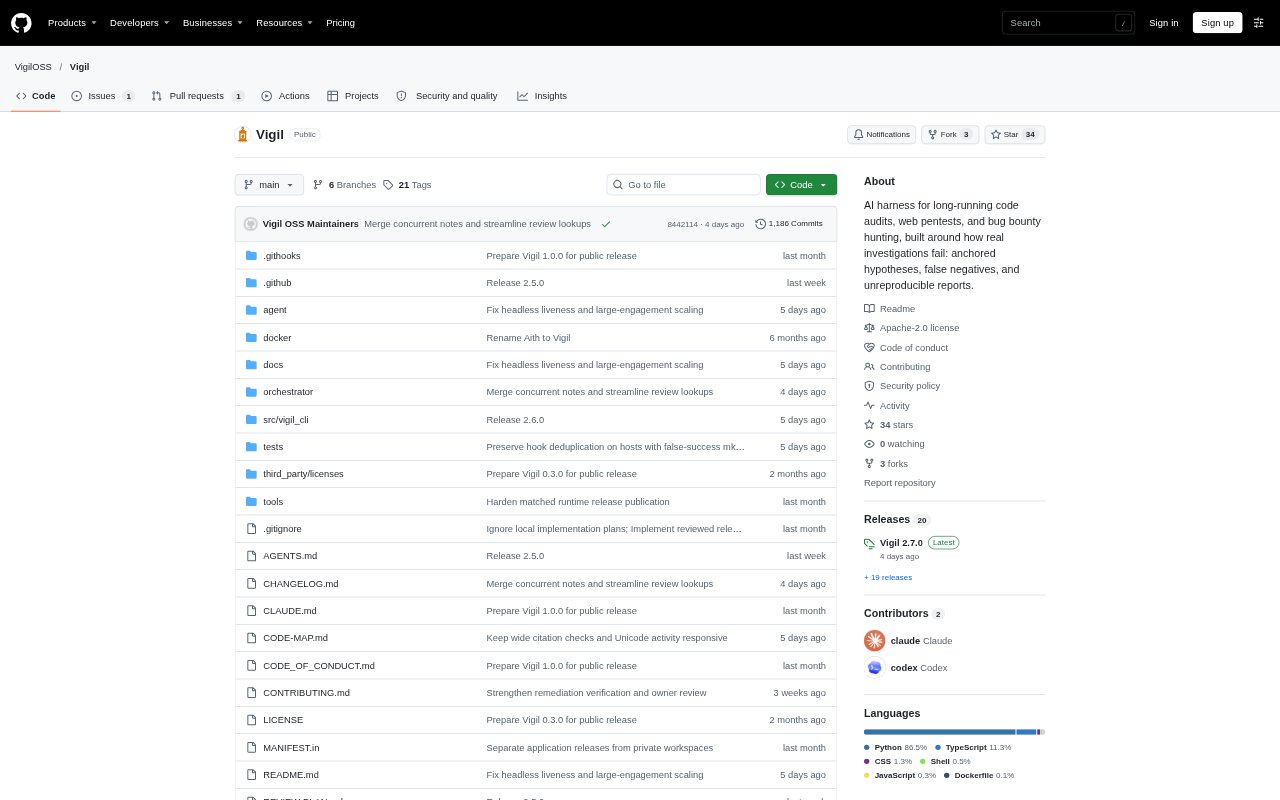
Vigil is an AI harness for code audits, web penetration tests, and bug bounty investigations. It coordinates an agent client through broad reviews, focused rereads, authenticated testing, and runtime reproduction, with a lead agent managing specialist work. Security professionals can start with source code, a live application, or both, then review findings and evidence through a local interface. Live testing is intended for authorized targets, and exploit work waits for approval by default.
Vigil Features:
Source Code Review: Vigil indexes a codebase and directs agents to examine vulnerability classes, trace callers, and review relevant files.
Focused Security Passes: Higher-risk code can receive fresh rereads with different lenses, including access control, error handling, business logic, and state.
Cross-Module Tracing: Agents examine how guards and assumptions cross module boundaries and whether separate paths can combine into a longer attack chain.
Authenticated Web Testing: For live application tests, users can import cookies and headers or capture browser traffic through Vigil’s mitmproxy workflow.
Runtime Reproduction: Vigil can run target code, reproduce bugs, and fuzz in its Kali container, while retaining command purpose, target, status, and output.
Engagement Records: Findings, evidence, coverage, blockers, proof work, and handoffs persist between sessions and appear in the local engagement interface.
Finding Verification: Specialist agents can challenge findings, test variants, and check whether evidence supports the proposed impact and report.
Vigil Benefits:
Less Repeated Setup: Persisted progress and handoffs let an investigation continue without depending on the previous agent conversation.
More Grounded Conclusions: Separating source-level leads from runtime proof helps distinguish a plausible bug from a demonstrated effect.
Clearer Evidence Trail: Recorded commands and transcripts give reviewers material to check when assessing a finding or advisory.
Fewer Blind Spots: Different review objectives and variant hunts help teams look beyond the first hypothesis or the original defect.
Safer Source Handling: Working from a sealed audit copy keeps the original project untouched during the investigation.
Use Cases:
Repository Security Audit: Review a source project for vulnerabilities, follow affected code paths, and investigate higher-risk files in focused passes.
Authorized Web Pentest: Test a live application within a reviewed scope, including specified exclusions, test accounts, and program rules.
Authenticated Application Tests: Assess routes that require a logged-in session by importing browser credentials or capturing a browser login through the proxy.
Bug Bounty Investigation: Follow a promising lead, reproduce its effect where possible, and prepare a report whose claims can be checked against evidence.
Finding Variant Search: After confirming a defect, look for related weaknesses in sibling routes, providers, controllers, or copied implementations.