
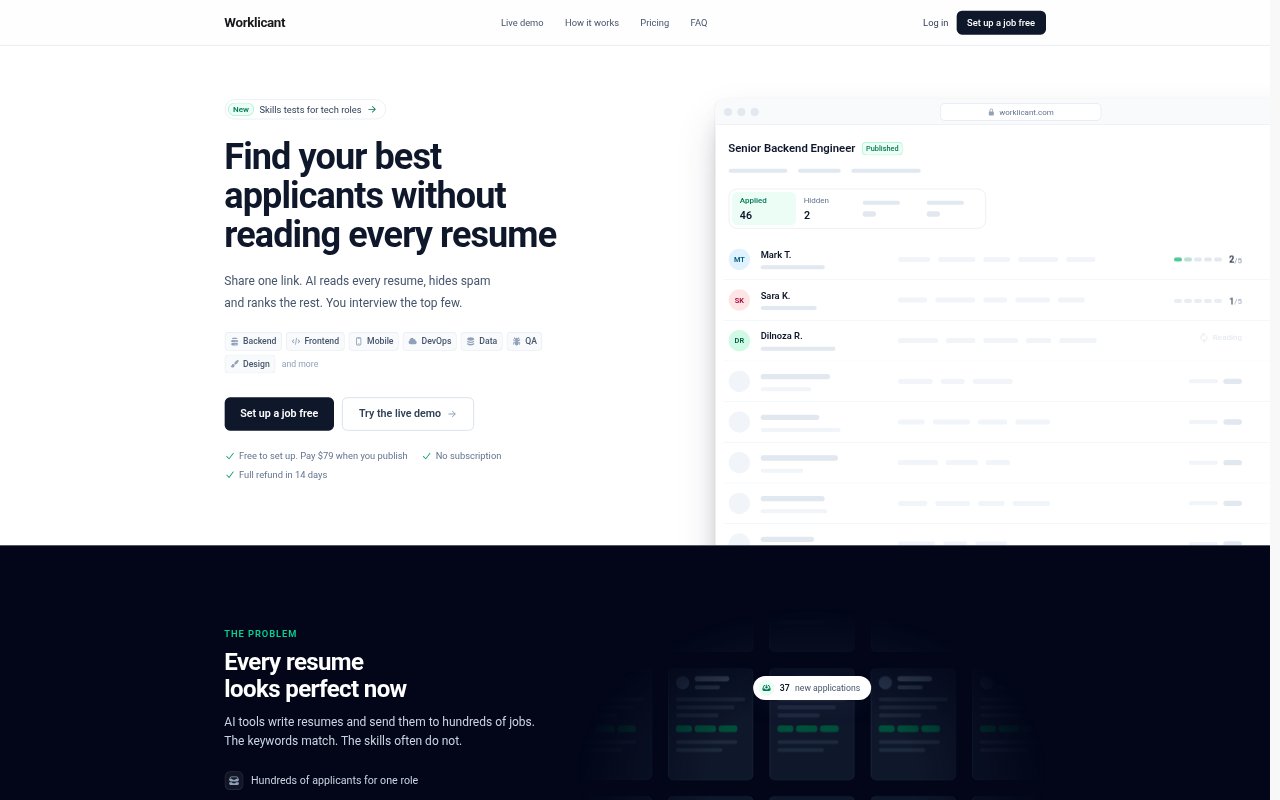
What is Worklicant?
Worklicant is an applicant screening and hiring platform for teams recruiting for tech roles, including backend, frontend, mobile, DevOps, data and design positions. It gives each vacancy a shareable application link, then reads and ranks incoming resumes so recruiters can focus on the applicants most relevant to the role. Teams can manage candidates, schedule interviews and add skills tests in the same workspace. Vacancies are paid for individually rather than through a monthly subscription.
Worklicant Features:
Resume Ranking: Worklicant reads resumes as they arrive, creates a score from 0 to 5 against the job and an ideal candidate, and sorts the applicant list by score.
Applicant Summaries: Each candidate gets a short AI-written profile with a score, key wins, seniority, skills, tools and past companies, so recruiters can review applicants without opening each CV.
Screening Rules: Recruiters can describe a rule in one sentence, hide applicants who fail it, and bring hidden candidates back into view with one click.
Team Candidate Board: Teams can move applicants through up to five custom stages per job, add private notes and tags, review stage history, and invite colleagues with a code.
Interview Scheduling: Recruiters can send a booking link for candidates to choose an available time, with options for Google Meet, video, phone or in-person interviews.
Skills Tests: A library of short, timed tests can be sent to candidates, with different questions for each person and test scores and cheating-risk information shown alongside the resume.
Worklicant Benefits:
Less Resume Review: Recruiters can spend more of their time assessing a shortlist and speaking with promising candidates instead of manually reading every application.
Fewer Unqualified Interviews: Ranking and screening rules help teams reserve interview time for applicants whose experience and skills appear closer to the role's requirements.
Shared Hiring Context: Keeping candidate stages, notes and history together makes it easier for colleagues to coordinate decisions without relying on separate spreadsheets.
Less Scheduling Back-And-Forth: Candidate-selected interview times reduce the email exchange involved in finding a slot that works for both sides.
Costs Match Hiring: Paying per vacancy avoids a monthly subscription charge during periods when the team is not opening a role.
Use Cases:
High-Volume Hiring: Use the ranked applicant list when a backend or frontend vacancy attracts more resumes than the hiring team can review individually.
Technical Role Screening: Set a role-specific screening rule and review ranked applications for positions such as mobile developer, DevOps engineer or data specialist.
Early Skills Checks: Send a short test to shortlisted applicants when the team wants evidence of practical skills before arranging an interview.
Distributed Hiring Teams: Use candidate stages, notes and history to keep recruiters and hiring colleagues aligned while they review applicants together.
Occasional Recruiting: Open a vacancy when needed without keeping a monthly ATS subscription active between hiring efforts.