

What is WriteText.ai?
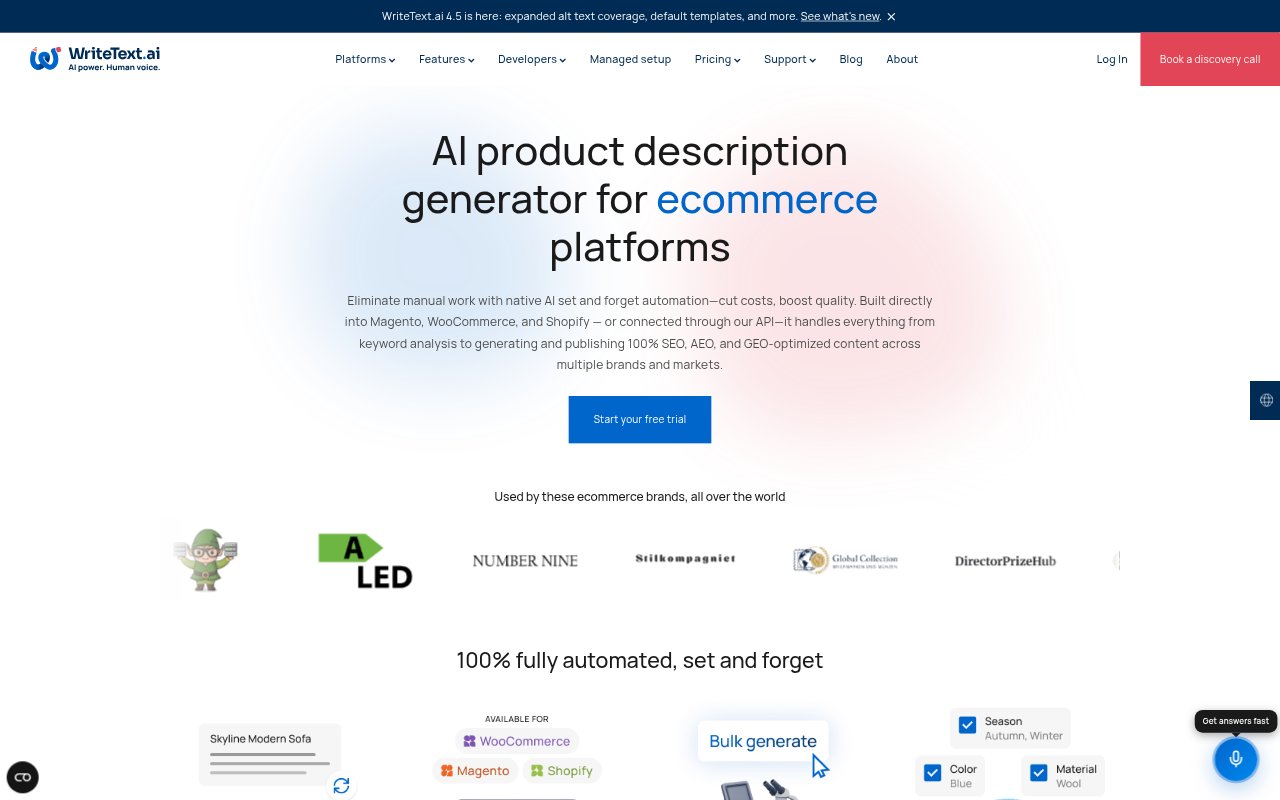
WriteText.ai generates ecommerce content for product and category pages, including descriptions, metadata, Open Graph text, image alt text, and FAQ blocks. It is designed for stores using Shopify, WooCommerce, or Magento, and can also connect to custom ecommerce platforms, PIM systems, and ERP solutions through its API. Teams can run content generation and publishing automatically or generate drafts for review, with tools for keyword analysis and templates that shape the copy.
WriteText.ai Features:
Product Page Copy: Generate short and long product descriptions, meta titles, meta descriptions, Open Graph text, and image alt text.
Catalog Automation: Run content generation in bulk for products and categories, detect new products, and publish automatically or after review.
Keyword Analysis: Review existing page rankings, find potential keywords, exclude negative keywords, and integrate selected terms across content.
Reusable Templates: Set structures, tone, and formatting rules for product content, with custom prompts and brand voice settings.
FAQ Generation: Add FAQ and People Also Ask blocks to templates using questions drawn from search data.
Store Integrations: Use the native Shopify, WooCommerce, or Magento app, or connect a custom store through the API.
WriteText.ai Benefits:
Consistent Catalog: Shared templates and brand voice settings help keep product pages aligned as a catalog grows.
Less Repetitive Work: Automating content creation and publishing reduces the manual effort of updating many listings.
Flexible Review: Choosing between automatic publishing and draft review lets teams match the workflow to their desired level of editorial control.
Focused SEO Work: Ranking and keyword information helps teams direct content work toward terms they have identified as relevant.
Team Coordination: Shared dashboards, permissions, audit logs, and credit tracking help teams manage content work across stores.
Use Cases:
New Product Launch: Prepare descriptions and metadata for a new product range before its listings go live.
Catalog Refresh: Update copy across an established store and set rules for ongoing automated content changes.
Category Expansion: Create category or collection descriptions when adding new sections to an ecommerce site.
Search Optimization: Review page keywords and use the analysis to guide revisions to product titles, descriptions, and metadata.
Multi-Store Operations: Coordinate content generation and credit management for an agency or business operating multiple brands or stores.