
What is Xtract search API?
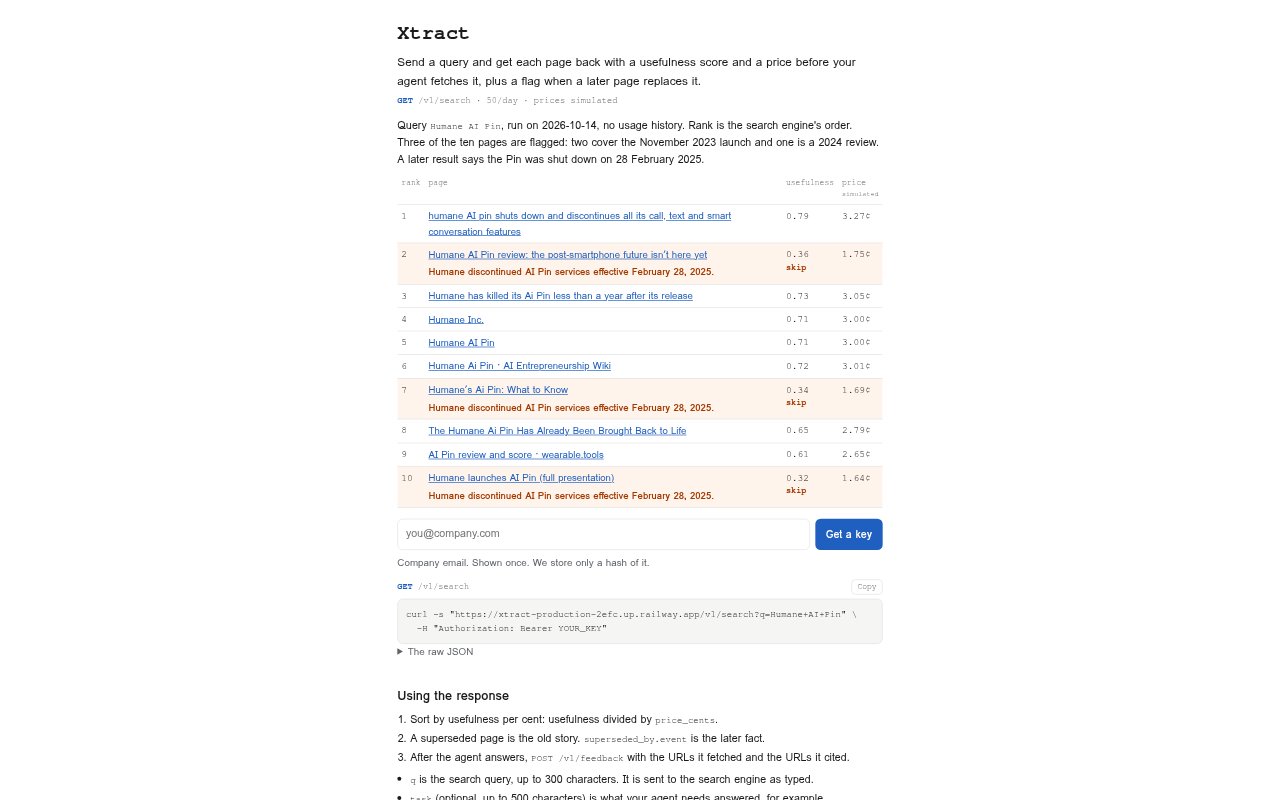
Xtract is a search API for agents that need to choose which web pages to read before answering a query. It returns search results with usefulness scores, simulated reading prices, and flags for pages that have been superseded by later information. Agents can provide a task to make scoring more relevant to the question they need to answer, then report which results they fetched and cited. The API is limited to 50 searches per day.
Xtract search API Features:
Query Search: Send a query of up to 300 characters to the API, which returns pages from the Keenable search engine in its search order.
Task-Specific Scoring: Add an optional task of up to 500 characters so each result is assessed against the agent’s question, rather than the query alone.
Usefulness Scores: Results receive a usefulness score from 0 to 1, and pages scoring below 0.45 are marked to skip.
Simulated Page Prices: Each result includes a simulated price in cents for reading the full page, giving agents a cost estimate before fetching it.
Superseded Results: A result can include a later page and event that replace its story, helping distinguish outdated coverage from newer information.
Citation Feedback: After an answer, send the URLs the agent fetched and cited to the feedback endpoint for follow-up scoring.
Xtract search API Benefits:
Less Unneeded Reading: Agents can set aside low-scoring pages before fetching them, reducing effort spent reviewing results that are unlikely to help.
Better-Focused Research: Scoring against the task can help an agent prioritize pages that address the specific question it needs to resolve.
Cost Awareness: Simulated page prices let teams compare estimated reading costs before choosing which results to retrieve.
Fresher Answers: Superseded-page flags make it easier to avoid basing an answer on an older account when a later fact is available.
Citation Review: Feedback on fetched and cited URLs gives teams a way to examine how result scores relate to their citation choices.
Use Cases:
Agent Web Research: Use the API in an agent workflow that searches the web, selects pages to fetch, and answers a user’s question.
Current Status Checks: Ask whether a product or service is still available, using superseded results to spot newer reports that change the answer.
Question-Focused Search: Give a research agent a broad query and a specific task, such as finding whether a product is still sold.
Page Selection: Compare usefulness scores and simulated prices when deciding which search results an agent should read.
Citation Evaluation: Submit fetched and cited URLs after an answer to review how scoring changes for pages used or omitted from citations.