
What is ZeroGPT?
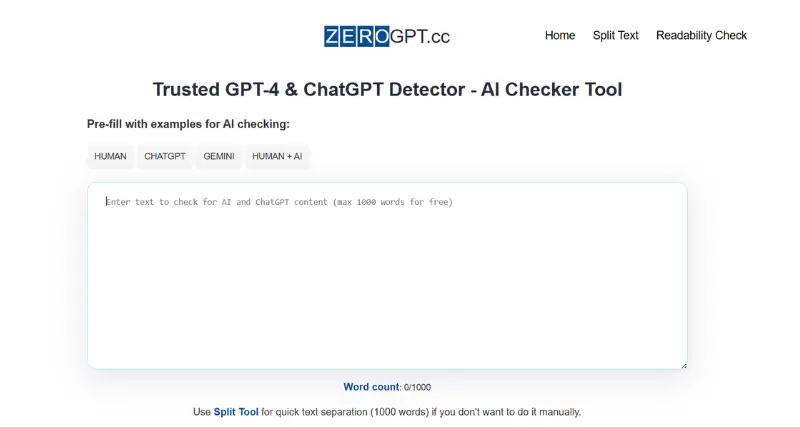
ZeroGPT is an AI content detection tool that uses advanced algorithms, machine learning techniques, and natural language processing to accurately identify AI-generated text. It is trained on a large dataset comprising both AI-generated and human-written content and provides precise results indicating the percentage or ratio of human-written text versus AI/GPT-generated text. The analysis is speedy, and the tool supports multiple languages and various AI language models. With a high accuracy rate of 98% or higher, ZeroGPT is trusted by millions of users for its reliability.
ZeroGPT Features:
AI Content Detection: The tool uses sophisticated algorithms and NLP techniques to identify AI-generated text.
Training Dataset: The tool is trained on a large dataset comprising both AI-generated and human-written content.
Accurate Results: The tool provides precise results indicating the percentage or ratio of human-written text versus AI/GPT-generated text.
Speedy Analysis: The tool delivers results quickly, with minimal waiting time for users.
Multi-Language Support: The tool supports multiple languages, ensuring accurate text detection across diverse linguistic contexts.
Model Compatibility: The tool is capable of detecting outputs from various AI language models, including GPT-4, GPT-3, GPT-2, LLaMA, Google Bard, and others.
High Accuracy Rate: The tool has a high accuracy rate of 98% or higher, making it trusted by millions of users.
Benefits:
Enables content moderation platforms to detect AI-generated text and distinguish it from human-generated content.
Helps online communities and forums prevent the spread of AI-generated misinformation or spam.
Assists researchers and journalists in investigating the use of AI-generated text and its potential impact on various domains.
Allows individuals and organizations to understand the extent of AI-generated content in online platforms and discussions.
Use Cases:
Content moderation platforms seeking to detect AI-generated text and distinguish it from human-generated content.
Online communities and forums aiming to prevent the spread of AI-generated misinformation or spam.
Researchers and journalists investigating the use of AI-generated text and its potential impact on various domains.