

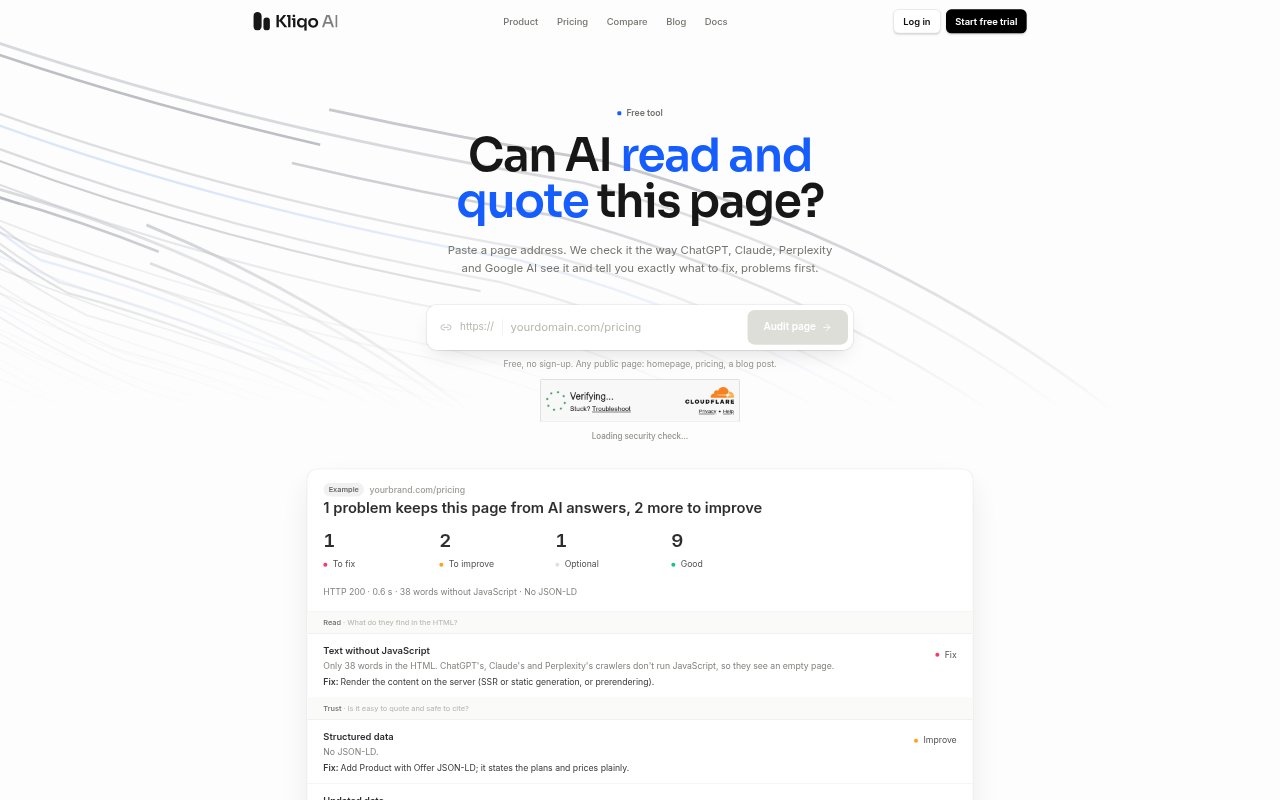
What is AI Page Audit?
AI Page Audit is a free tool for checking whether AI search crawlers can reach and read a public webpage. It tests the page using several AI crawler user agents and examines the content and signals available in the page’s HTML. The report highlights problems first and gives plain-language suggestions for addressing them. It checks one page at a time; it does not tell you whether AI assistants already mention your brand.
AI Page Audit Features:
Crawler Access: Tests whether robots.txt rules, server responses, firewalls, noindex, or nosnippet settings may prevent AI crawlers from accessing or using a page.
HTML Content: Reports how much readable text is present in the HTML without JavaScript, along with the page title, description, and headings.
Structured Data: Checks for structured data and identifies whether the page includes JSON-LD that can help describe its content.
Page Signals: Shows the page’s updated date, canonical URL, sitemap and robots.txt health, response time, and whether llms.txt is present.
Buyer Questions: Checks whether the page answers buyer questions with direct information that AI systems can find and quote.
Fix Suggestions: Pairs detected issues with plain-language recommendations and sorts the results by problem, improvement, optional item, and good status.
AI Page Audit Benefits:
Clear Priorities: Seeing the most serious issues first makes it easier to decide which page problems deserve attention before smaller improvements.
Faster Diagnosis: A single report brings together access, HTML, and page-detail checks, reducing the need to inspect each signal separately.
More Useful Reviews: Plain-language fixes give marketers and site owners a practical starting point when discussing changes with a developer.
Realistic Expectations: Separating page readability from brand mentions helps users understand what a page audit can establish and what it cannot.
Low-Friction Testing: Free access without signup makes it straightforward to check a public page before deciding whether further investigation is needed.
Use Cases:
Pricing Page Check: Review a pricing page to see whether crawlers can access it and whether its plan details appear in readable HTML.
Product Page Review: Check a main product or feature page for crawler restrictions, thin HTML content, missing structured data, or unanswered buyer questions.
Homepage Audit: Assess a public homepage for access issues and the page details that may make its content harder for AI systems to interpret.
Comparison Page Review: Inspect a comparison or alternatives page to find technical barriers and determine whether its information is available without JavaScript.
Blog Post Check: Audit a published article to confirm that its text, headings, dates, and canonical URL are visible to the tool’s crawler checks.