

What is Resemble AI?
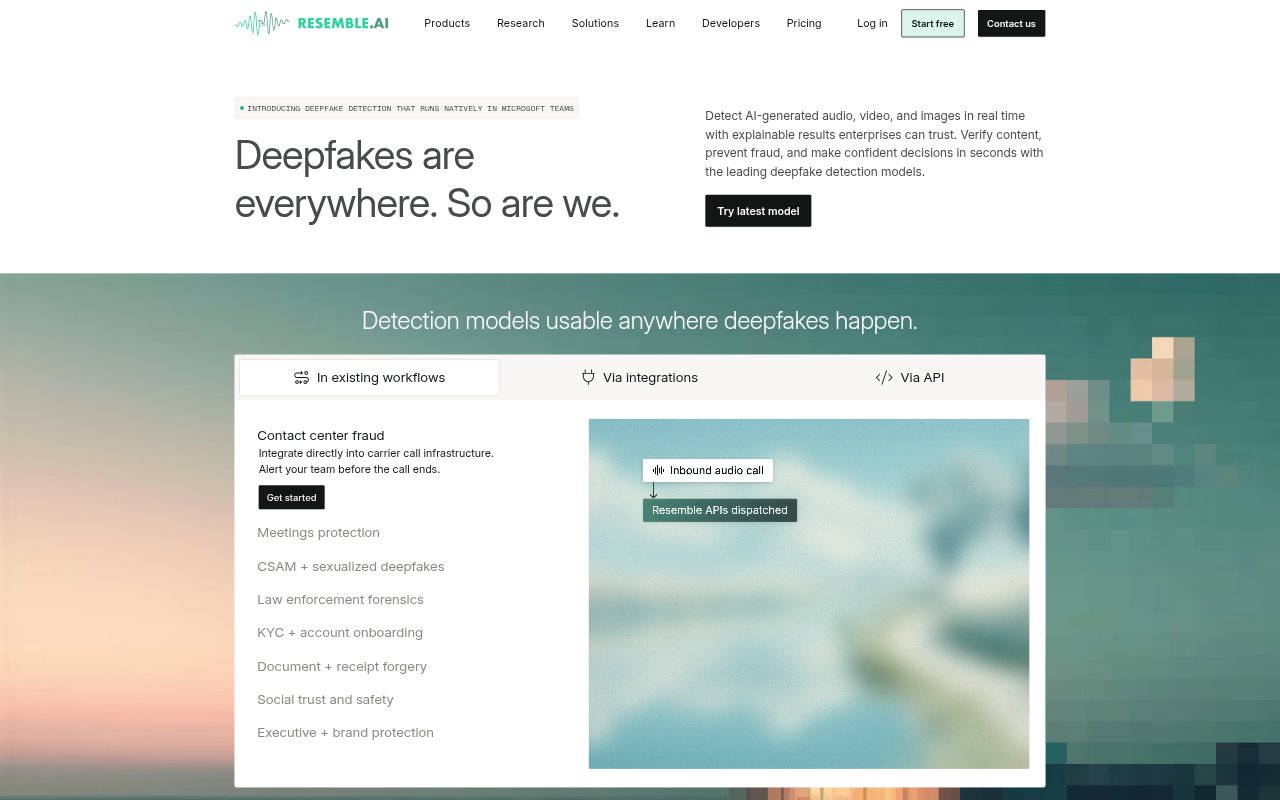
Resemble AI is an enterprise platform for detecting synthetic and manipulated media, verifying identities, and adding watermarks to AI-generated content. Its detection models cover audio, images, video, and text, with tools for live-call protection and document checks. Security, trust and safety, fraud, and compliance teams can use it through an API or deploy it in their own environment, including air-gapped infrastructure.
Resemble AI Features:
Multimodal Detection: Detection models assess audio, images, and video for signs of AI generation, with text also included in Resemble's model range.
Live Call Checks: Audio and video can be checked during a call to flag synthetic voices or faces, with alerts returned while people are still talking.
Document Analysis: Pixel-level checks identify AI-generated or manipulated IDs, receipts, claim photos, and other submitted images, including the altered region.
Identity Matching: Teams can enroll a person's voice and likeness, then compare later documents or selfies against that identity.
Watermarking: PerTh Multimodal adds imperceptible watermarks to content and returns a deterministic score, verdict, and human-readable results.
Flexible Deployment: A REST API covers the listed modalities and connects with SIEM, SOAR, and identity platforms, while containerized on-premises deployment supports air-gapped environments.
Resemble AI Benefits:
Earlier Intervention: Teams can investigate suspicious calls or submissions before approving a reset, sharing sensitive information, or releasing a payout.
More Consistent Reviews: Detection results give reviewers a common basis for assessing media instead of relying only on visual inspection or a caller's familiar voice.
Clearer Incident Records: Deterministic verdicts and human-readable results help teams document why content was flagged and support reproducible review.
Data Control: On-premises and air-gapped options let organizations keep detection inside environments with strict data-handling requirements.
Fewer Missed Alterations: Checking submitted pixels and comparing later materials with an enrolled identity can expose issues that basic identity or document checks may not assess.
Use Cases:
Contact Center Fraud: Telephony and service-desk teams can flag a cloned voice during a call before an agent approves an account recovery or password reset.
Meeting Protection: Security teams can check live meetings for a synthetic participant impersonating an executive or requesting a wire, credential, or document.
KYC and Claims: Onboarding, insurance, and payments teams can screen IDs, receipts, damage photos, and proof of delivery before approving accounts or payouts.
Hiring Verification: Recruiting and security teams can check a candidate interview for a fabricated face or voice before proceeding with hiring decisions.
Forensic Review: Law enforcement teams can examine suspected synthetic media and produce reproducible reports for evidence review.