

What is CodeRelay?
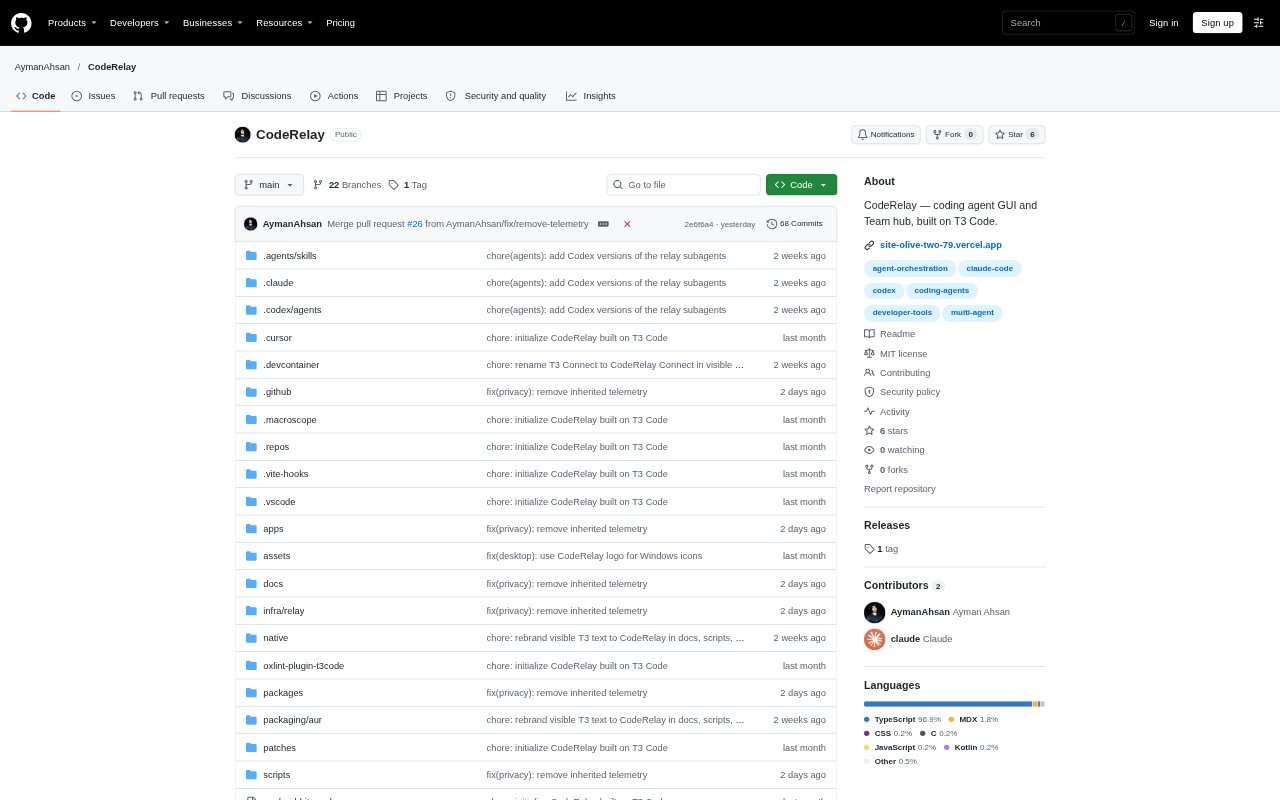
CodeRelay coordinates coding agents belonging to teammates, so work can move between people who own different parts of a repository. Teammates define the paths they own, agree on a contract pinned to a Git commit, and hand off a task for another person’s agent to complete in its own local thread. The completed task returns with a summary, branch, and commit to review. It is for teams using coding agents who want to coordinate changes across shared code.
CodeRelay Features:
Ownership Routing: Teammates list the repository paths they own, and tasks can be routed by those paths or addressed to a named teammate.
Pinned Contracts: A task can reference a shared spec or schema pinned to a Git commit, giving both teammates an agreed version to work from.
Reviewed Handoffs: Tasks normally wait for the receiving teammate to review and accept them before an agent starts work.
Local Agent Threads: After acceptance, the task starts in the receiving teammate’s own local agent thread and environment.
Progress Sharing: The hub shares presence, ownership, checkpoint summaries, branches, paths touched, and claims on files in progress.
Agent Provider Choice: Teammates can connect supported agents including Codex, Claude Code, Cursor, Grok, OpenCode, and Antigravity, using their own provider credentials and subscriptions.
CodeRelay Benefits:
Fewer Collisions: Clear path ownership and file claims help teammates see who is working where and reduce the chance of agents editing the same areas.
Shared Assumptions: Pinning a contract to a commit gives collaborators a common reference for dependent API, schema, or type changes.
Work Stays Local: Each teammate keeps agent conversations and provider credentials in their own environment while coordinating through shared updates.
Reviewable Results: A returned summary, branch, and commit give the receiving teammate concrete material to inspect before integrating a change.
Resilient Agent Work: Local agent work can continue if the self-hosted hub goes offline, avoiding a dependency on uninterrupted hub availability.
Use Cases:
Cross-Team API Work: Hand a backend API change to the teammate who owns that area while another person’s agent continues building the frontend.
Schema-Dependent Changes: Coordinate work that depends on a shared schema or spec by pinning the contract version before the receiving agent begins.
Route And Type Updates: Keep teammates informed when an agent changes routes, schemas, or types that other work in the repository depends on.
Parallel Repository Work: Divide tasks across teammates who own different repository paths and track which files agents have claimed or changed.
Local Workflow Trial: Run the Alice-and-Bob demo to test a handoff between two local sessions before connecting teammates through a self-hosted hub.