

What is The Public Eye?
The Public Eye is a public-information tool for exploring what current members of Congress have sponsored, how they have voted, and which committees they serve on. Users can browse by state or ask John Q. Public, an interactive assistant that answers questions about congressional actions and bill contents from records available on the site. It is designed for people who want to understand their representatives’ legislative records without starting from individual government databases.
The Public Eye Features:
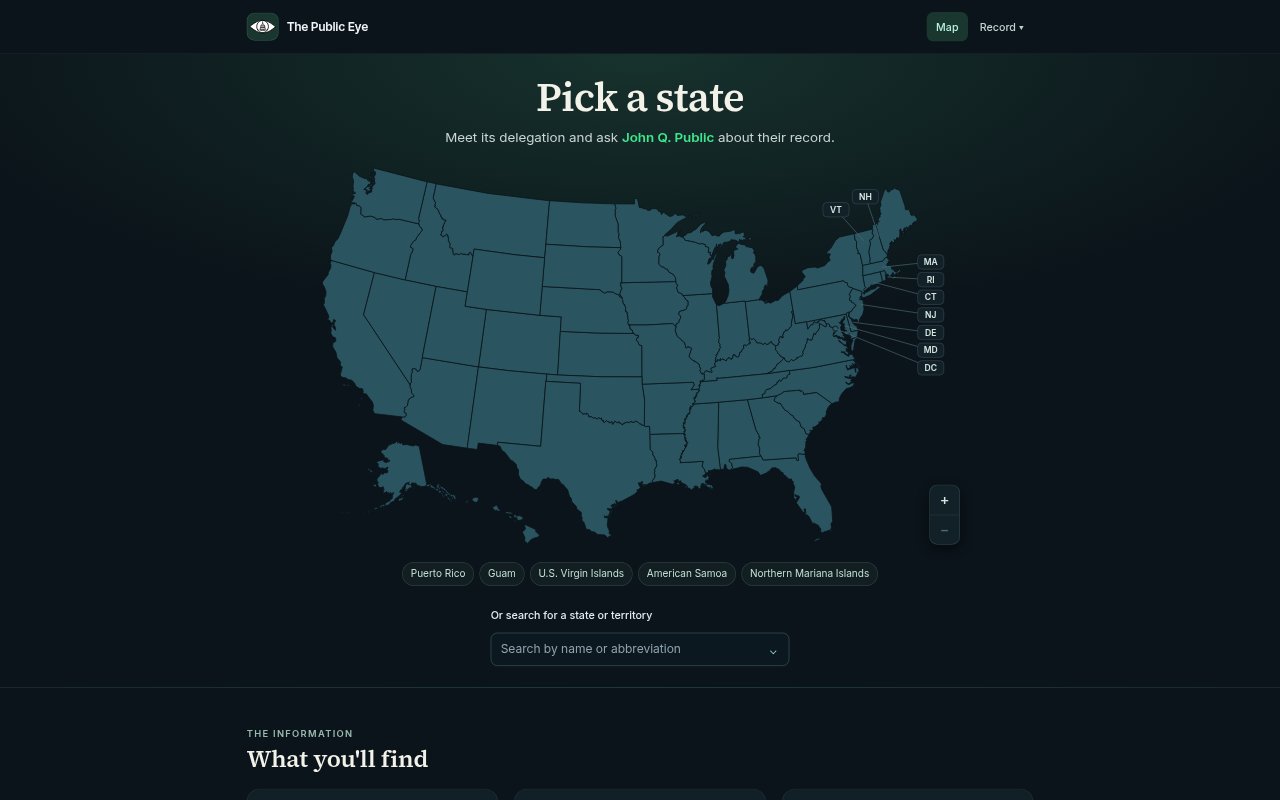
State Map: Choose a state to view a map of its districts and find the senators and representatives serving its delegation.
Member Profiles: Open a member’s record to review their sponsored and cosponsored bills, recorded votes, and committee memberships.
Bill Records: Browse bills associated with members, including their progress, summaries, and full text where available.
Vote History: Check whether a member voted Yea or Nay on legislation, giving each recorded vote a place in their public record.
Interactive Assistant: Ask John Q. Public questions about members’ actions or what a bill means, using the records available on the site.
Cited Answers: The assistant searches the site’s records, links sources for factual statements, and says when it cannot find an answer rather than guessing.
The Public Eye Benefits:
Clearer Records: Seeing bills, votes, and committee roles together helps you build a more rounded view of a representative’s work.
Topic Context: Reviewing votes and bill details can help you understand a member’s record on a legislative subject that matters to you.
Traceable Answers: Linked citations let you check the records behind factual responses instead of relying on an unsupported summary.
Fewer Assumptions: When the available records do not answer a question, the assistant’s stated uncertainty helps distinguish missing information from a confirmed fact.
Accessible Research: Browsing by state and asking questions in plain language can make congressional records easier to approach than searching bill documents one by one.
Use Cases:
Representative Research: Look up your state’s delegation before contacting an office or discussing what its members have done in Congress.
Bill Tracking: Check which bills a member sponsored or cosponsored and whether those bills have progressed through Congress.
Voting Review: Compare a representative’s recorded Yea and Nay votes on a subject such as farm legislation.
Bill Explanation: Ask what a particular bill says and follow the cited material to review its text or summary.
Law Outcomes: Investigate which bills introduced by a member became law by exploring their bill records and status.