

What is Timon?
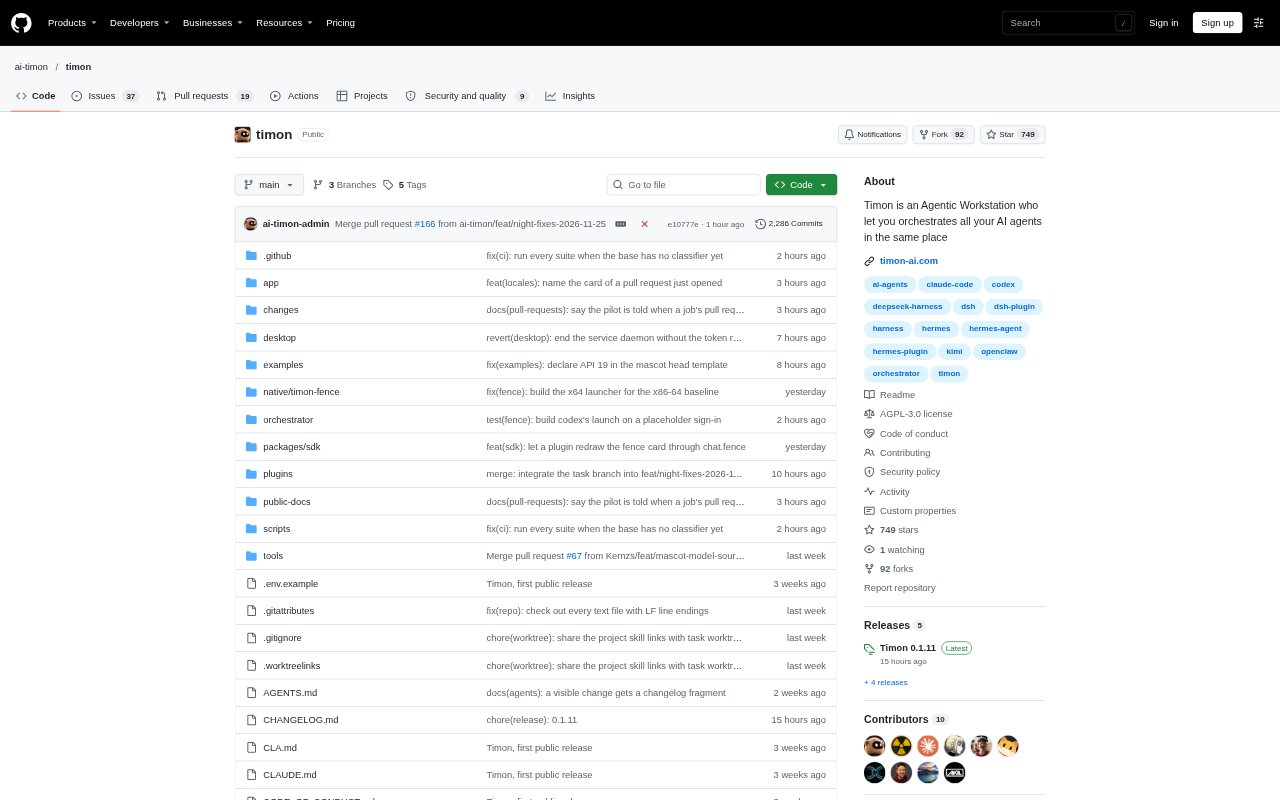
Timon is a desktop workstation for running AI coding agents in parallel on your own machine. It brings agent CLIs such as Claude Code, Codex, GitHub Copilot, Grok, opencode and Hermes into one workspace, where tasks can be planned, coded, reviewed and merged. It is aimed at developers who want to coordinate agent-driven coding work across projects, monitor progress, and approve actions that need their attention.
Timon Features:
Agent Workspace: Run supported agent CLIs side by side in one desktop window, with two, four, six or nine conversations visible in a multichat grid.
Model Selection: Choose a model for each role and switch models during a conversation while keeping its context, using your subscriptions, API keys or endpoint.
Task Pipeline: Turn a request into Kanban tasks that agents code, review and merge, with each task assigned its own Git worktree.
Automated Workflows: Start work with cron routines, GitHub or GitLab webhooks, and visual workflows built from agents, conditions and scripts.
Local Agent Memory: Keep notes in a local vault that agents can read before acting and update with lessons for later tasks.
Remote Approvals: Use the web interface on a phone and receive push notifications when an agent needs a decision on a task.
Quota Fallbacks: Move a conversation to another configured provider when one reaches its usage limit, retaining the thread's context.
Timon Benefits:
Less Tab Switching: Keeping agent conversations in one workspace makes it easier to follow parallel coding work without juggling separate terminal windows.
More Continuous Work: A background daemon keeps queued work running after the desktop window closes, so tasks can continue while you are away.
Clearer Ownership: Separate worktrees and defined coding, review and merge roles help keep parallel changes distinct and make each task's progress easier to track.
Fewer Repeated Instructions: Saving lessons in the local notes vault gives agents guidance from earlier work, reducing the need to restate project rules.
Human Oversight: Approval requests and permission cards let you stay involved when an agent needs a decision or is about to take an important action.
Use Cases:
Overnight Backlogs: Queue a batch of coding tasks before logging off, then let the daemon run them overnight through the task pipeline.
Parallel Development: Assign separate backlog items to agents in their own worktrees while following their status on a shared Kanban board.
Independent Code Review: Have one model implement a change and another review the diff before the merger runs the test suite and lands it.
Remote Task Approval: Respond from a phone when an agent asks a question or needs your go-ahead while you are away from your workstation.
Triggered Coding Work: Use a scheduled routine or a GitHub or GitLab webhook to start a workflow in response to a time or repository event.