

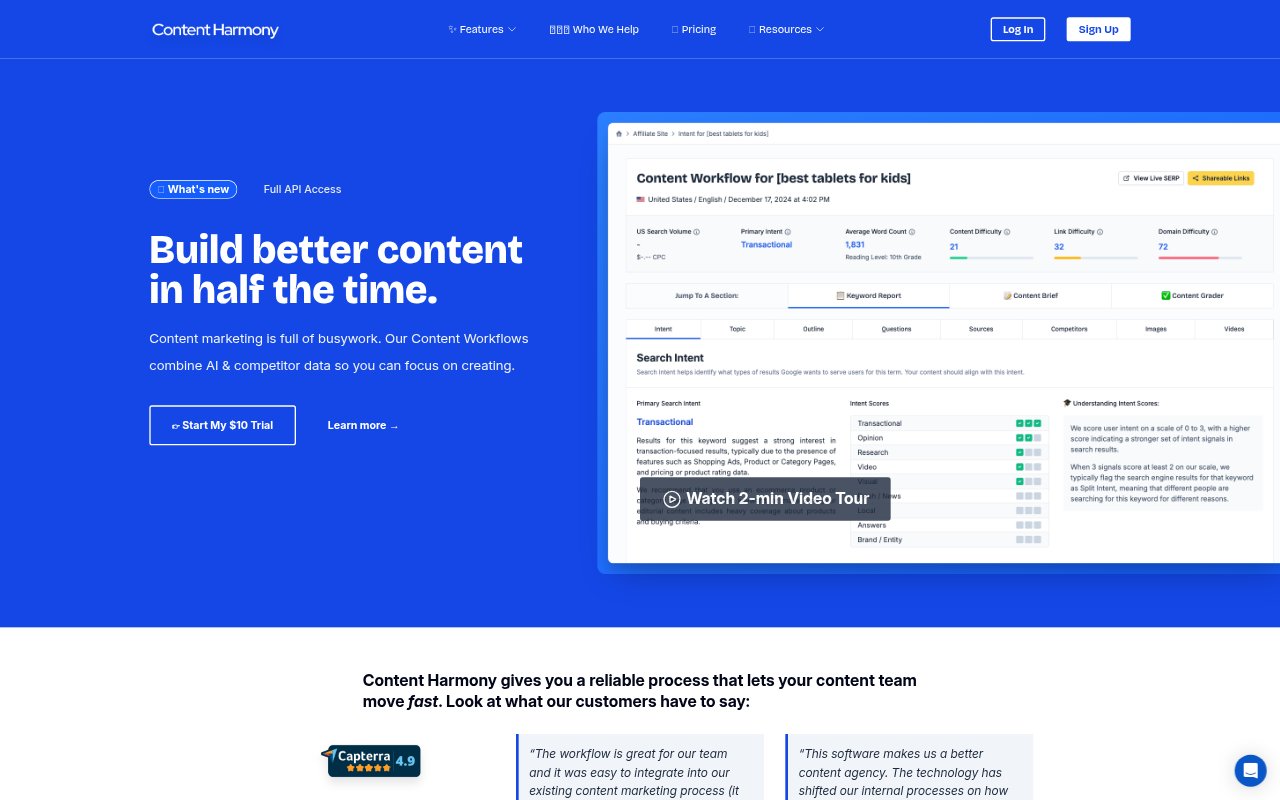
What is Content Harmony?
Content Harmony is a content research and optimization platform for SEO and content marketing teams, agencies, publishers, and freelance writers. It combines keyword analysis, content brief creation, and draft grading in a workflow for individual pages. Teams can explore search intent, competitor content, and related topics before writing. They can also share briefs with collaborators and use them alongside their existing editorial processes.
Content Harmony Features:
Keyword Reports: Each workflow starts with a keyword report containing search data to help strategists research a topic and plan a page.
Search Intent: Search intent classification helps teams understand what searchers are looking for and shape content to match that intent.
Competitor Outlines: Competitor document structures and outlines give writers a view of how other pages organize coverage of a topic.
Topic Analysis: The research process identifies overlapping keywords, entities, and questions that may need to be addressed in the content.
Custom Briefs: Teams can create content briefs from their own templates, with notes and details for writers, editors, or subject matter experts.
Content Grader: An AI-driven topic model grades drafts and existing pages, and supports optimization before new or refreshed content is published.
Content Harmony Benefits:
Less Research Busywork: Bringing research data together in one workflow cuts down on the manual steps that can slow content planning.
Consistent Guidance: A shared brief format helps strategists provide writers with dependable, repeatable direction across a content program.
Clearer Handoffs: Shareable briefs give clients, freelancers, editors, and designers access to the context they need to contribute.
More Complete Pages: Reviewing related topics and grading content helps teams check for gaps before a page is ready to publish.
Faster Workflows: A structured process helps teams spend less time assembling briefs manually and more time creating and improving content.
Use Cases:
SEO Topic Research: An SEO strategist can research a target keyword and review search intent, competitor structures, and related topics before assigning a page.
Writer Briefing: A content manager can prepare a standardized brief with key requirements and notes for an in-house or freelance writer.
Agency Client Work: An agency can share research and briefs with clients and writing collaborators to gather feedback or begin drafting.
Content Refreshes: A publisher can grade an existing article, identify possible topic gaps, and use the results to guide an update.
Editorial Planning: A content team can use keyword reports and briefs to prepare work for a monthly calendar or a more frequent publishing schedule.