

What is Devin?
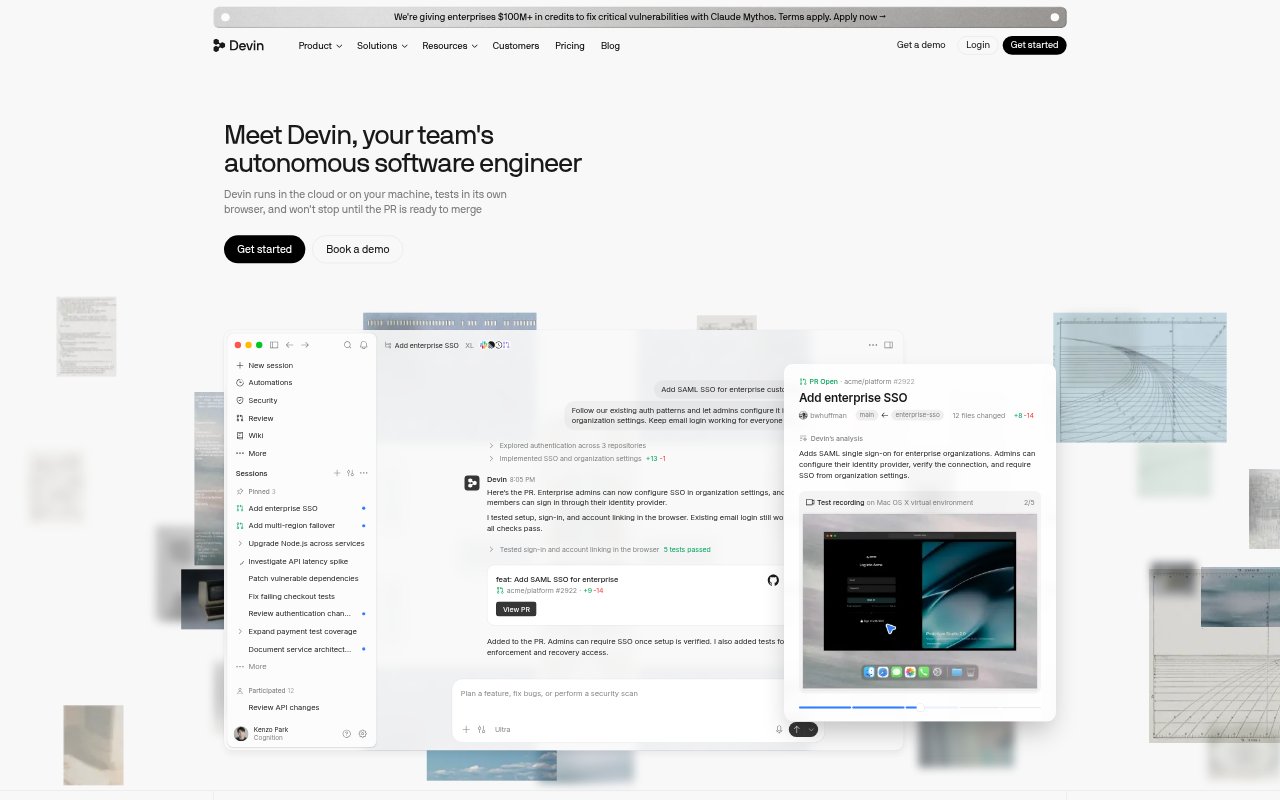
Devin is an AI coding agent for developers and engineering teams, designed to take software tasks from a request through implementation, testing, and a pull request ready for review. It can work in the cloud or on a developer’s machine, and teams can delegate larger tasks to parallel cloud agents. Devin also supports code review, scheduled workflows, and trigger-based automations for recurring maintenance and incoming engineering issues.
Devin Features:
Cloud Execution: Devin runs in the cloud or on a developer’s machine, and delegated tasks can continue while the developer’s laptop is closed.
End-to-End Testing: It provisions Windows, Mac, or Linux virtual machines as needed, builds software, tests it in a browser, and records its interactions.
Parallel Agents: For a larger assignment, Devin divides work among parallel cloud agents, manages them, and reports back when they finish.
Codebase Mapping: It maps codebases and system architecture, then updates diagrams and code maps as the underlying code changes.
Work Interfaces: Teams can delegate work to Devin Cloud, iterate in Desktop or CLI, or tag Devin in Slack, Teams, and other threads.
Code Review: Devin Review checks code for bugs and vulnerabilities, and can be assigned to fix identified issues in one click.
Triggered Automations: Scheduled workflows and triggers can handle bugs, failed CI, alerts, security scans, performance issues, and test coverage gaps.
Devin Benefits:
Less Waiting: Cloud delegation lets developers hand off substantial tasks and continue other work, including when their own computer is offline.
Wider Issue Coverage: Automated checks and proactive scans can help teams find defects, vulnerabilities, and testing gaps that might otherwise go unnoticed.
Faster Triage: Turning alerts and failed CI into engineering work can shorten the handoff from a reported problem to a prepared fix.
More Review Capacity: An additional automated pass for potential issues can leave human reviewers more time to focus on design and technical trade-offs.
Steadier Maintenance: Recurring workflows can keep dependency updates and routine upkeep from competing as heavily with planned development.
Use Cases:
Fix Failed CI: Assign Devin to investigate a failed build, make the needed code changes, and prepare a pull request for the team to review.
Handle Production Alerts: Use a triggered workflow to investigate an error-rate alert, reproduce the problem, and work toward a code fix.
Upgrade Dependencies: Schedule recurring work to update project dependencies, such as upgrading a React or Next.js version.
Build a Feature: Delegate a feature request, such as adding bulk actions to a table, and have Devin implement and test the flows.
Review Code Changes: Assign Devin Review to inspect a proposed change for bugs or vulnerabilities before it reaches production.