

What is OpenOS EDNA Engine?
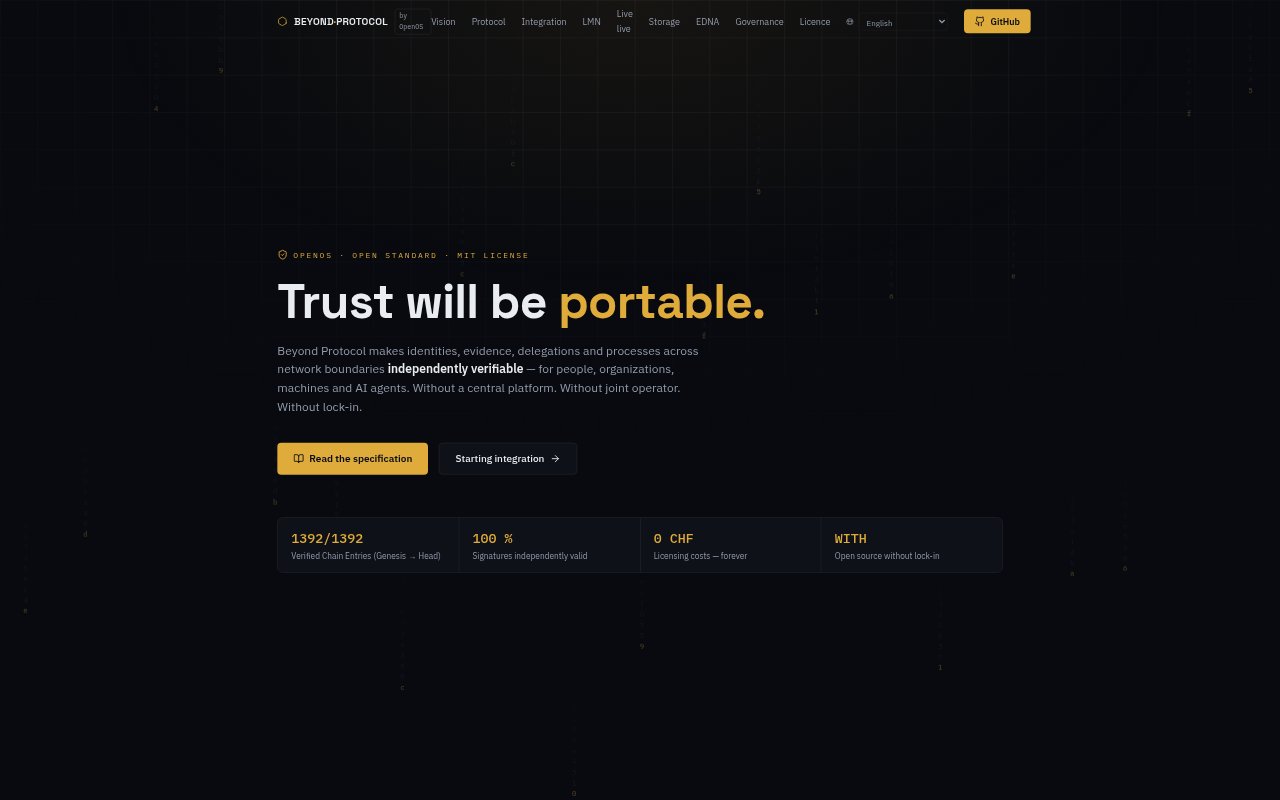
OpenOS EDNA Engine is presented through Beyond Protocol, an open, vendor-neutral verification standard for digital identities, proofs, and AI agents. The project is associated with OpenOS and SEBKLAEY, is available under the MIT license, and is described as free to use. Its stated focus on cross-network trust makes it relevant to teams working on identity and proof verification, as well as those considering how AI agents fit into trusted digital workflows.
OpenOS EDNA Engine Features:
Identity Verification: Digital identities are one of the standard’s stated verification areas, making identity trust a central part of its scope.
Proof Verification: The standard also covers proofs, providing a defined area for work involving the verification of digital claims or evidence.
Agent Verification: AI agents are included in the verification scope, alongside digital identities and proofs, rather than treated as a separate topic.
Vendor Neutrality: Beyond Protocol is described as vendor-neutral, so its stated purpose is not tied to one provider’s identity or verification products.
Open Source: The project is open source, and its MIT license makes the licensing terms part of its public description.
Free Access: The standard is described as free to use, with no paid price or plan identified.
Cross-Network Trust: Its stated focus is universal cross-network trust, with verification spanning identities, proofs, and AI agents.
OpenOS EDNA Engine Benefits:
Less Vendor Dependence: A vendor-neutral approach gives teams a way to consider verification without making one provider the defining choice.
Lower Cost Barrier: Free access lets teams explore the standard without a stated purchase price or subscription commitment.
Open Licensing: The MIT license gives organizations a clear, open-source basis for assessing whether the project suits their needs.
Broader Trust Scope: Considering identities, proofs, and AI agents within one standard can help teams keep these trust topics in view together.
Network Reach: The cross-network focus is relevant to teams that need to think beyond trust within a single network.
Use Cases:
Identity Projects: Teams working on digital identity workflows can assess whether the standard’s verification scope matches their project.
Proof Workflows: Organizations handling digital proofs can consider Beyond Protocol as a standard focused on proof verification.
AI Agent Trust: Teams exploring trust for AI agents can review a standard that explicitly includes agents in its verification scope.
Cross-Network Planning: Product and technical teams can evaluate the standard when planning work around trust across networks.
Standards Review: Organizations comparing verification approaches can consider a free, open-source option described as vendor-neutral.