

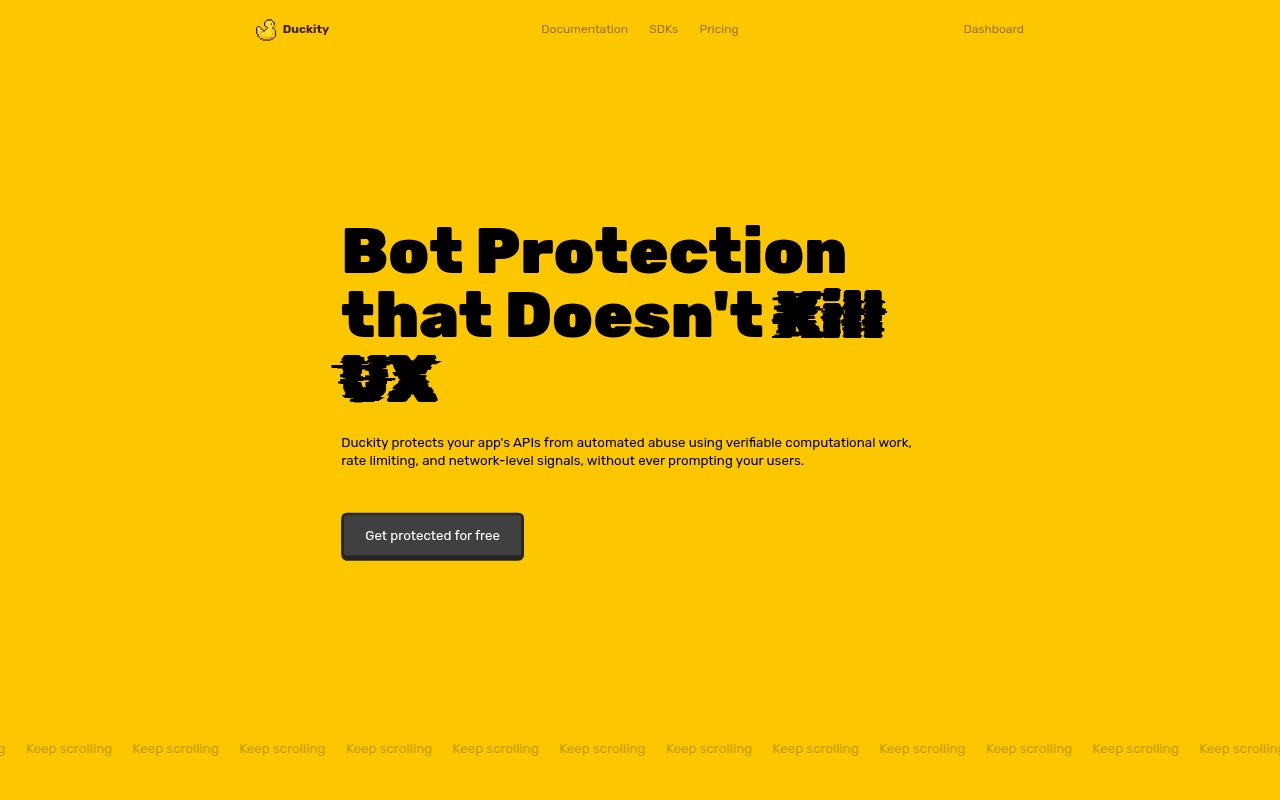
What is Duckity?
Duckity protects application APIs from automated abuse using computational challenges, rate limits, and network-level signals. It is for teams that want to make bot and AI-driven abuse harder without asking visitors to complete visual or auditory puzzles. Teams can manage protection through applications and policies, and end-user data is processed and stored in Frankfurt, Germany.
Duckity Features:
API Bot Protection: Duckity applies bot defenses to application APIs, aiming to make automated abuse require meaningfully more resources.
VDF Challenges: Verifiable delay function-backed computational challenges add work for automated clients without requiring a user-facing puzzle.
Rate Limiting: Rate limits are part of Duckity’s combined approach to controlling automated requests to an application.
Network Signals: Network-level signals contribute to the assessment of requests alongside rate limits and computational challenges.
Application Policies: Teams can manage their application security using Duckity’s applications and policies.
Request Data Handling: Duckity processes client IP addresses and requests, with IP addresses anonymized in many cases; end-user data is handled in Frankfurt, Germany.
Duckity Benefits:
Fewer User Interruptions: Visitors can reach protected applications without solving visual or auditory challenges, avoiding an extra verification step.
Higher Abuse Costs: Making automated activity consume more resources can raise the effort required to abuse an application.
Accessible Protection: Avoiding visual and audio puzzles means bot defenses do not depend on a visitor’s ability to complete those tasks.
Focused Data Processing: Limiting processing to client IP addresses and requests helps keep the data involved in protection focused on network activity.
Centralized Controls: Managing protection through applications and policies gives teams a place to control their application security.
Use Cases:
Public API Defense: Protect APIs exposed to automated traffic by combining computational work, request limits, and network-level signals.
AI Abuse Prevention: Add a layer of protection when a business wants to make automated use of its application harder without challenging visitors.
Accessible Web Services: Protect services used by a broad audience while avoiding visual or auditory puzzles that can create access barriers.
Request Rate Control: Apply rate limits alongside other signals when automated requests put pressure on an application’s API.
Application Security Management: Use Duckity’s applications and policies when a team needs to manage protection across its application security setup.